
I used to stand in the grocery store staring at labels like USDA Organic, Fair Trade, and Certified Naturally Grown as if they were a secret code I was supposed to crack before checkout. Were these “green” labels on my salad mix just buzzwords for marketing? What did any of it really mean?
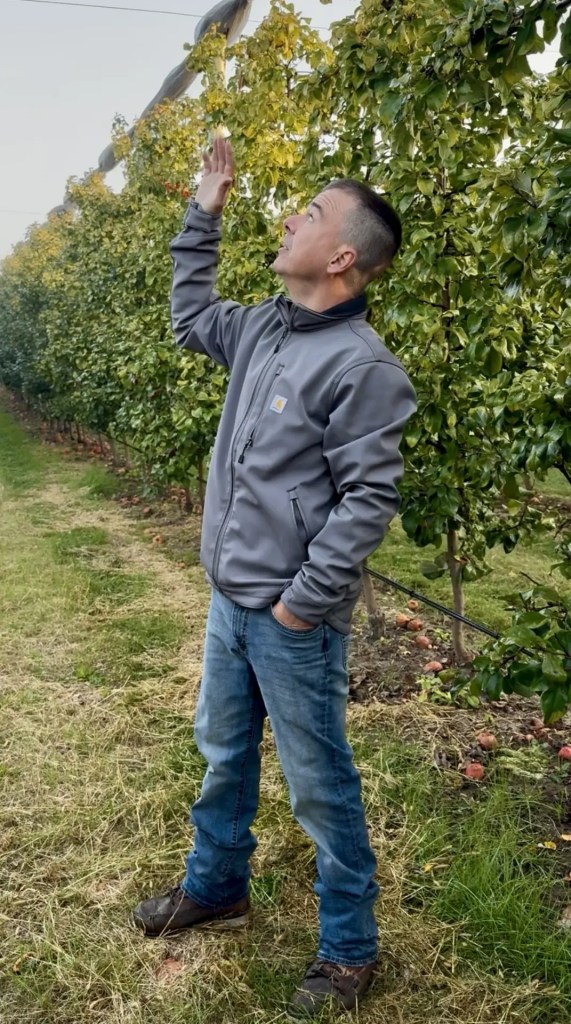
Since recently joining the Red Tomato team, I’ve had the opportunity to fully dive into that question, going behind the scenes of sustainable farming and the meaning behind the labels. So I over-packed my suitcase, hopped on a plane, and flew out to Michigan, determined to get my hands dirty.
I arrived at Applewood Orchards in Deerfield, Michigan, greeted warmly by Michael Swindeman, a fourth-generation apple orchard farmer. As we toured his 300 acre orchard, I began to understand the difficulties that growers face, and seeing his practices up close made it clear that every label tells a story…not just about the food, but about the farmers, the land, and the communities behind it.
That’s why I put together my findings to compare the most common sustainable food labels, sharing what I’ve learned in a way that’s easy to understand, practical, and rooted in real farming.
Top Sustainable Food Labels You Should Know About
USDA Organic
What it is:
We’ve all heard of Organic, but what’s really behind the label? Organic farming in the U.S. dates back to the 1940s, but the USDA set a national standard in 2002 to give consumers confidence in certified products. USDA Organic sets standards for crops and livestock that avoid synthetic pesticides, herbicides, and GMOs. Soil health, water quality, pest management, and ecological balance are all monitored through third-party inspections.
Why it matters:
Organic farming reduces chemical exposure, protects ecosystems, and encourages biodiversity. It promotes practices like crop rotation, soil fertility management, and responsible land stewardship, making it a trusted standard for environmentally conscious consumers.
Consumer considerations:
Through my research, I learned that Certified Organic packaged products have “labeling levels” which I thought were important to note:
-
- Products with 95% or more organic ingredients can display the USDA Organic seal
-
- Products with at least 70% can say “Made with organic,”
-
- Products with less than 70% can only list specific organic ingredients.
Despite these nuances, USDA Organic remains a widely recognized, reliable way for shoppers to support eco friendly, sustainable farming practices.
Regenerative Organic Certified
What it is:
I’ll be honest,before I started researching food labels, I had never heard of Regenerative Organic Certified. It’s a newer certification, launched in 2017 by the Rodale Institute and its partners. Building off of Organic Certification, it requires zero use of synthetic pesticides, herbicides, and fertilizers. ROC’s focus is on rebuilding healthy soil, protecting water, and supporting the overall ecosystem.
Why it matters:
Healthy soil is a living ecosystem full of microbes, fungi, and organic matter, but decades of industrial farming has depleted much of the world’s agricultural soil health. ROC focuses on the long-term commitment that farmers are healing the soil by using natural methods that help restore life to the land. Choosing ROC-certified food means you’re supporting farmers who prioritize long-term land stewardship and care for the environment, so every purchase contributes to healthier ecosystems and more resilient farming communities.
Consumer considerations:
Prices may be higher due to the labor-intensive practices, but you’re helping farmers care for the land and communities in a way that benefits both people and the planet. For shoppers, it’s a tangible way to make a difference with everyday choices while exploring fresh, responsibly grown produce.
Side note: Turns out regenerative agriculture is more complex than I thought: there are over five major certifications worldwide, plus many other regional or niche programs. Research on soil health, carbon capture, and other outcomes is still ongoing, so there’s plenty to learn about what really makes a farm regenerative and how it impacts soil, food, and farmers.
Certified Naturally Grown (CNG)

What it is:
Certified Naturally Grown was founded in 2002 as a grassroots, farmer-driven certification for small and mid-size farms. Peer inspections confirm that farms follow soil-friendly practices and sustainable growing methods. It’s similar to USDA Organic but more accessible for farmers who want to stay independent or operate at a smaller scale.
Why it matters:
It highlights growers who are working hard to nurture their soil, protect water, and farm responsibly, even if they don’t have the resources or need for a costly certification. It also encourages transparency, innovation, and adaptation for regional climates.
Consumer considerations:
CNG standards vary by farm and are not federally regulated, so it may be helpful to ask growers about their specific practices. For me, it’s a reminder that sustainability doesn’t have to come from a big label, and gives me confidence that the food I’m buying comes from farms actively making thoughtful, environmentally responsible choices.
Fair Trade / Equal Exchange
What it is:
Admittedly, chocolate and coffee are among my top three favorite indulgences. Put them together in a martini glass with Bailey’s, and I can forgive Monday for existing. Luckily, Fair Trade certification helps ensure that the farmers growing these crops are treated fairly, paid well, and supported in their communities. Brands like Equal Exchange, a worker-owned cooperative, source directly from small-scale farmers, helping them earn fair prices while using sustainable practices. For me, enjoying Fair Trade products means I can indulge in my favorites while knowing the people behind them are cared for.
Why it matters:
Fair Trade connects shoppers to ethical farming practices and community development, supporting growers who prioritize both social and environmental responsibility.
Consumer considerations:
Fair Trade focuses on social and economic impact rather than full environmental certification, so pairing it with other eco-focused labels gives a more complete picture. Choosing Fair Trade products allows me to support small-scale farmers, promote fairness, and enjoy my favorite treats with purpose.
Meet EcoCertified®: Red Tomato’s Standard for Ecologically Grown Fruit

What it is:
My recent trip to Applewood Orchards really drove home how much a farm’s local climate, pests, and soil shape the way fruit is grown. Since its launch in 2004, EcoCertified® has helped local fruit growers in the Northeast, Midwest, Southeast and Mid Atlantic grow apples and peaches sustainably while adapting practices to their region’s unique climate and conditions. It helps farmers protect soil, conserve water, and create habitats for pollinators, following science-backed protocols from the IPM Institute, all inspected by a third-party.
Why it matters:
Most USDA Organic fruit is grown in dry, arid regions. In the Eastern U.S. and surrounding regions, humidity and pest pressure are higher, which makes meeting USDA Organic standards challenging. EcoCertified was introduced specifically for these local growing conditions, helping growers farm sustainably while adapting to their unique environment. Targeted sprays are applied only when necessary, keeping the focus on natural pest management, with an emphasis on protecting the land and pollinators.
Consumer considerations:
Buying EcoCertified® fruit means supporting farmers who are actively improving their land, creating pollinator habitats, and delivering fresh, sustainable produce to local markets. With an emphasis on distributing the produce locally, the EcoCertified program delivers fresher fruit to shoppers, reduces transportation emissions, and strengthens regional food systems.
Learn how EcoCertification works
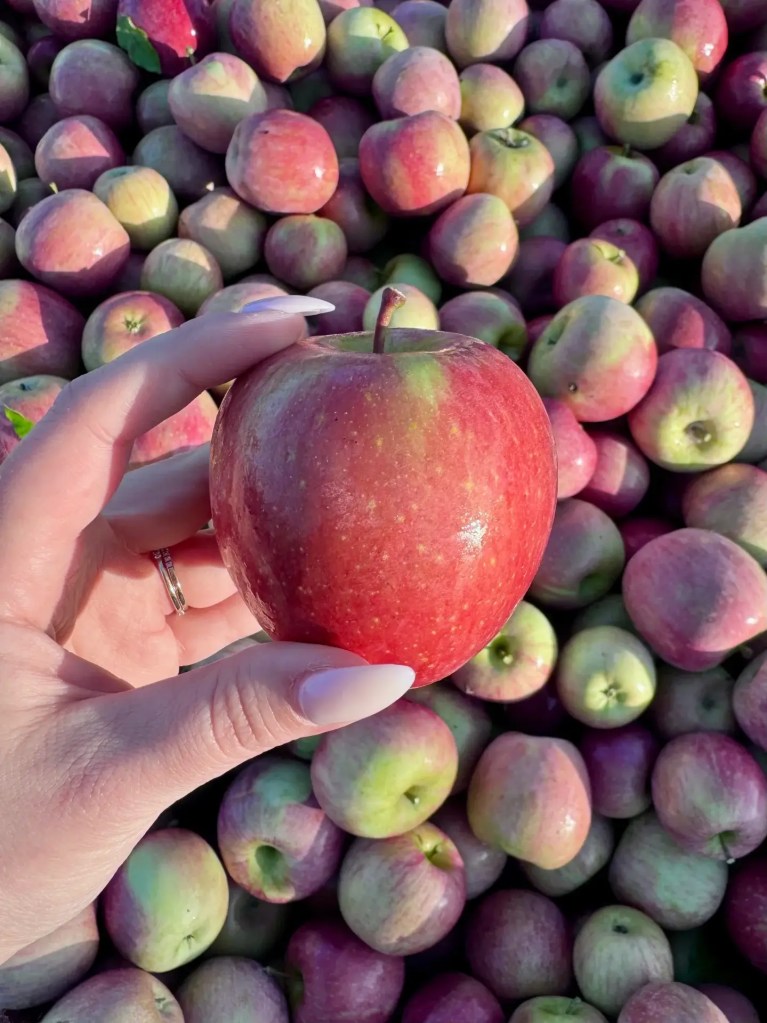
After visiting Michael Swindeman’s orchard, I found myself hours later sitting in a crowded airport, my bags packed, staring at a delayed flight board. As I waited, I reflected on the care in every row of trees, the pride Michael takes in his apples, and the dedication of mid-sized farms like his. One thing became clear to me: he is part of a much bigger story. Across the country, farmers rely on programs like EcoCertified to stand out in a crowded market and farm in a way that is thoughtful, community-minded, and connected to the land.
Seeing it firsthand made me realize that sustainable food labels are more than stickers. They tell the story of who grew your food, how they care for the land, and why it matters. Every label you recognize is a chance to support local growers, protect ecosystems, and help build a resilient, equitable food system. So the next time you bite into an EcoCertified apple or sip some Equal Exchange coffee, remember: you are part of the story too. Every choice matters, and together we can support farmers, communities, and the land that feeds us all.
To find EcoCertified® fruit, visit redtomato.org or ask your local retailer if they carry it.
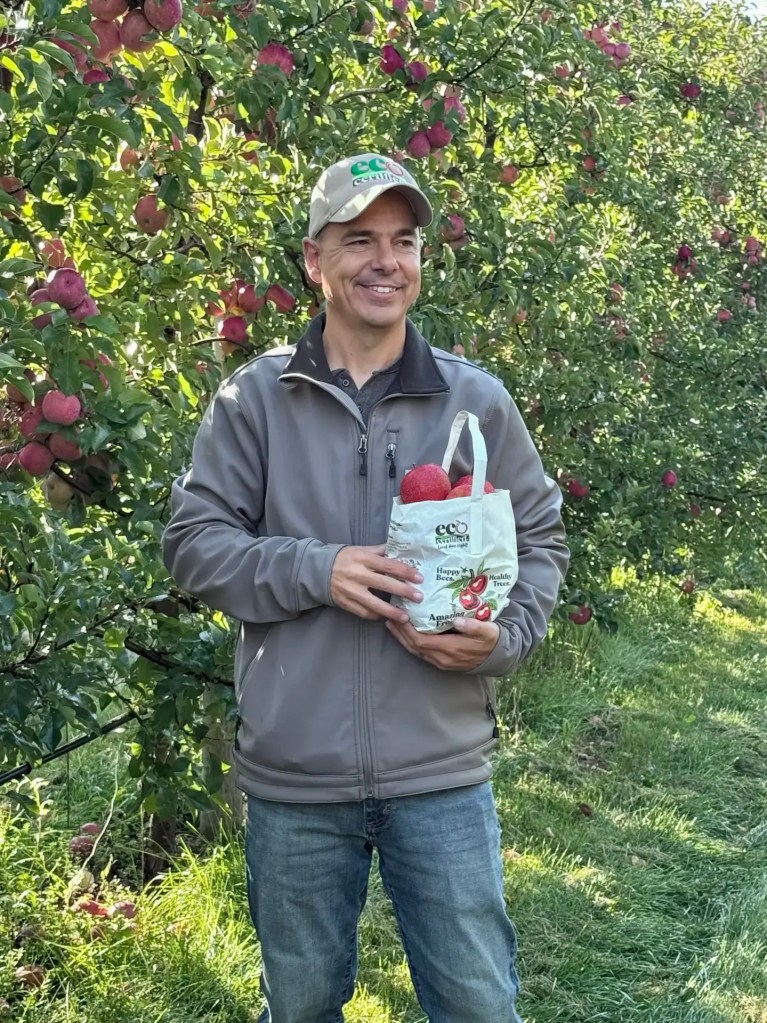
Meet the farmers behind the EcoCertified® label
So What Should You Look For?
Start with labels you trust, but don’t stop there. Ask questions, stay curious, and look for transparency. When possible, support systems that work directly with farmers to build something more sustainable.
Explore how Red Tomato works alongside growers
Discover more stories from our network

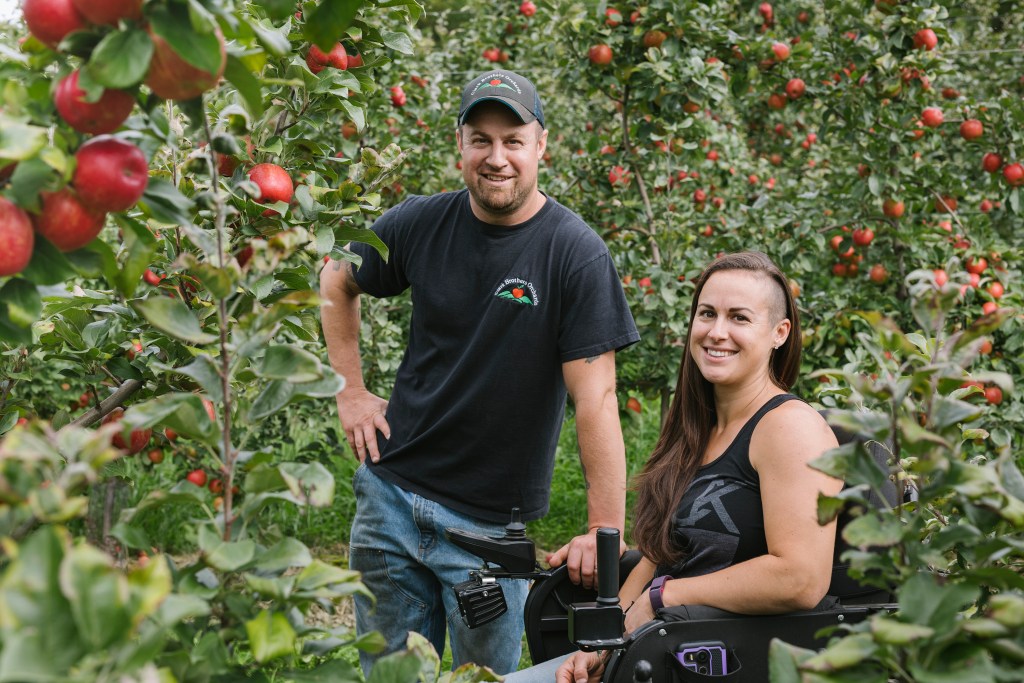
More to Explore: Sustainablity in Action
At Clark Brothers Orchards, sustainability isn’t something you can point to all at once. It shows up in small, daily decisions: when to intervene, when to wait, how to build soil over time.
It’s the kind of work that doesn’t always fit neatly into a label, but it’s exactly what those labels are trying to represent.
Read more: